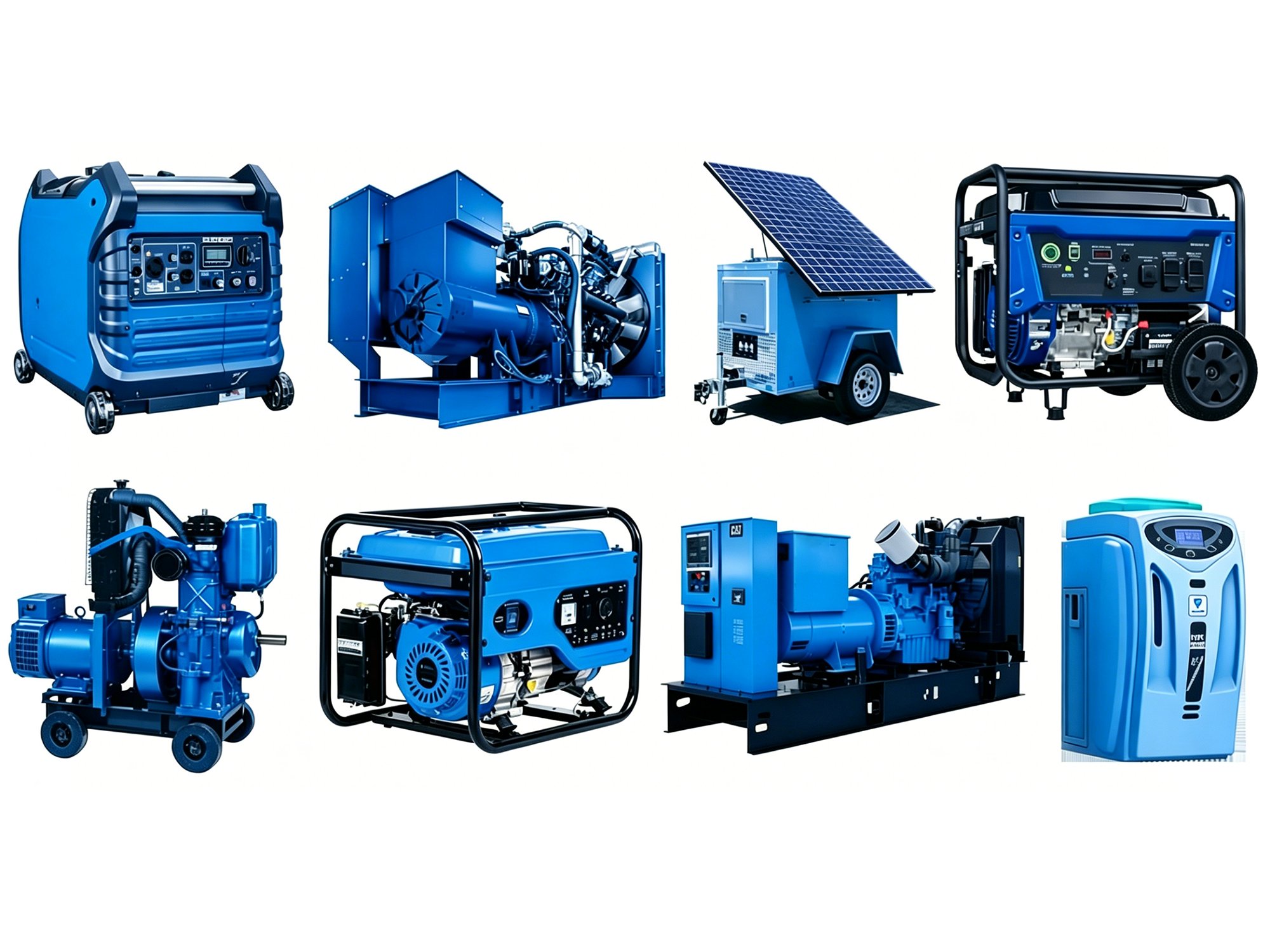
Many people confuse generator sets and alternators, but they are not the same thing — an alternator is only one component of a generator set.
In this article, UsuperPower will walk you through both alternators and generator sets in detail, comparing them so you can clearly see the differences.
What Is an Alternator
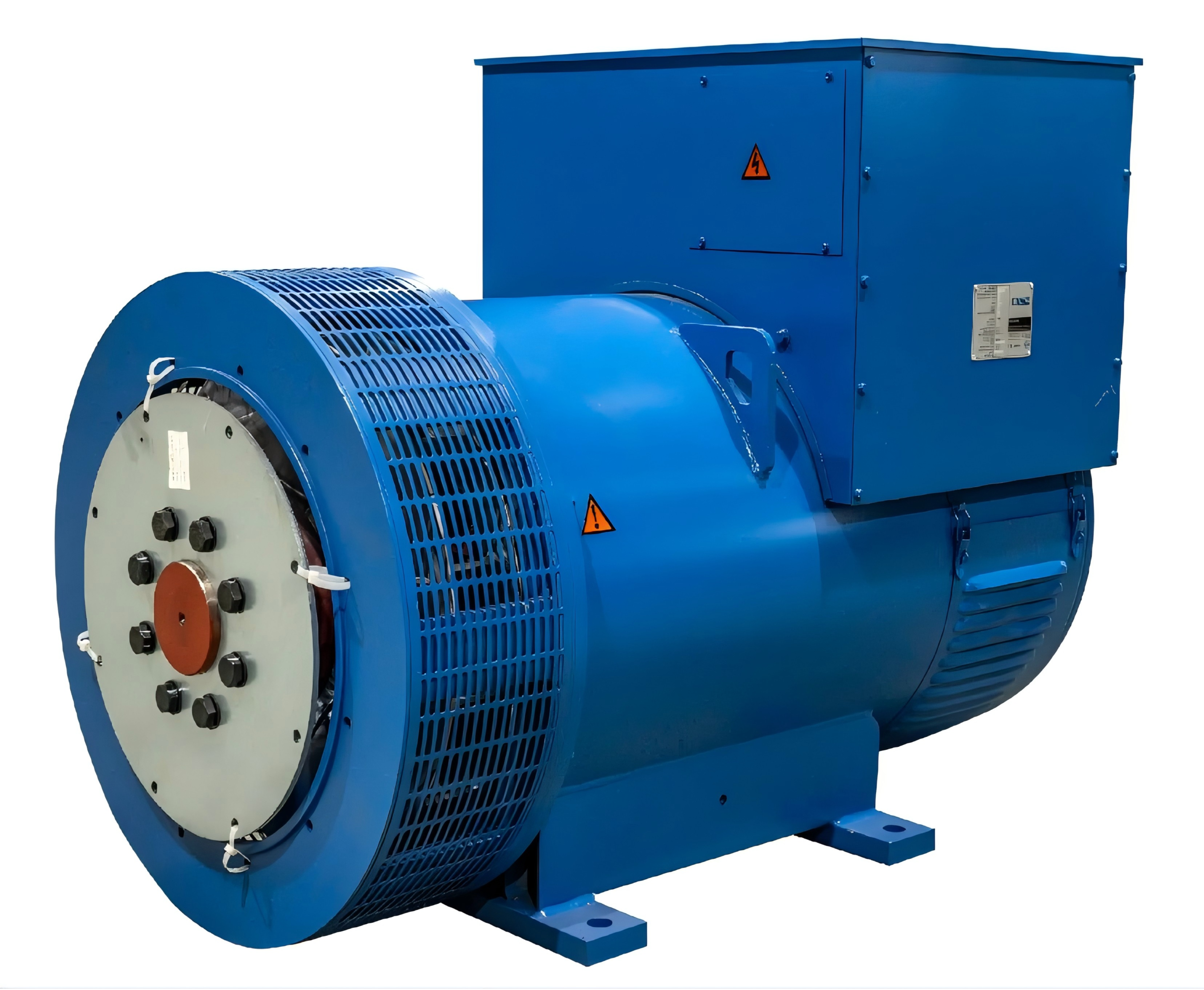
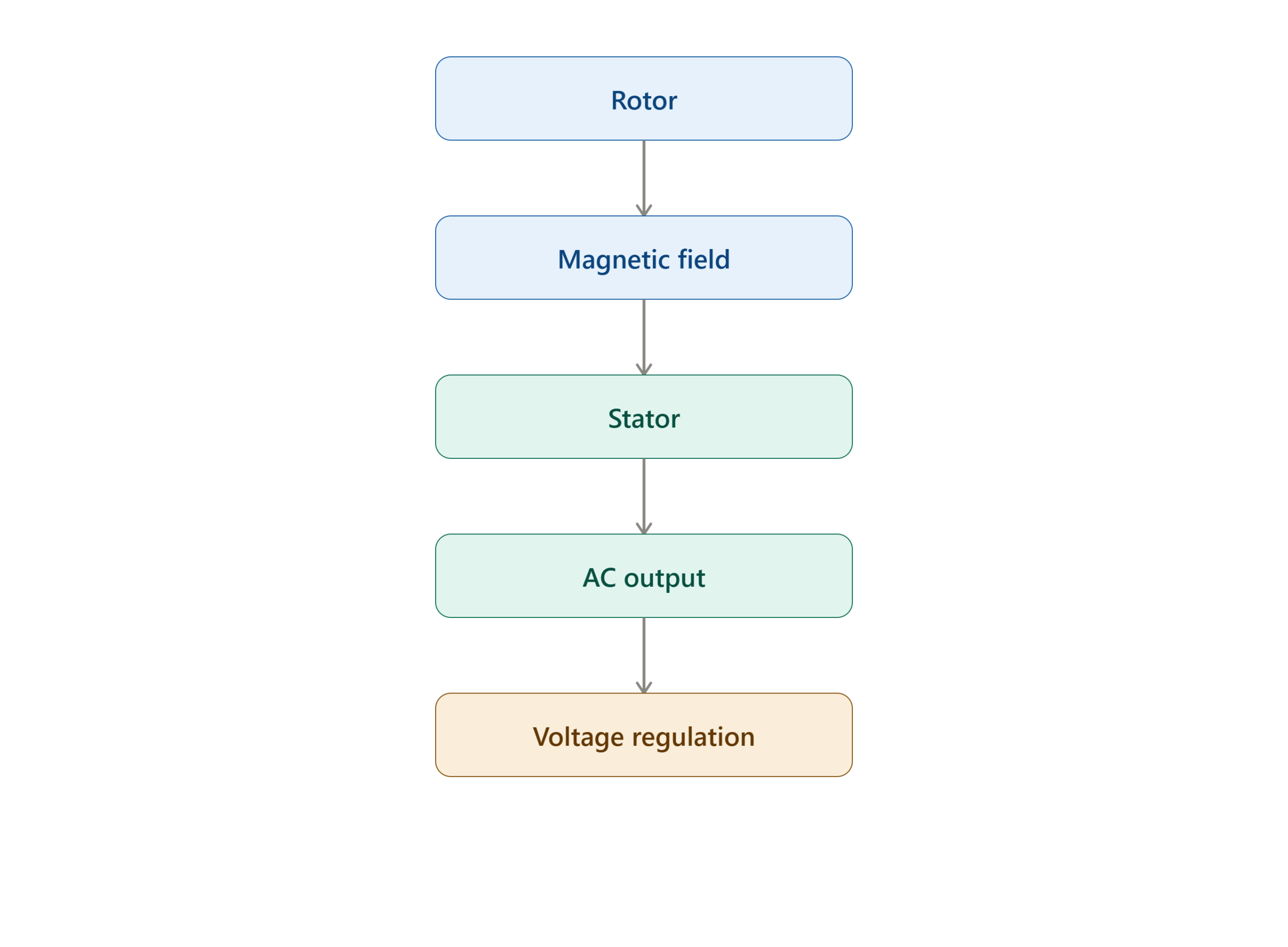
An alternator is a power-generating device that converts mechanical energy into alternating current (AC). Inside an alternator, the rotor creates a rotating magnetic field, and the stator windings cut through that magnetic field to generate AC electricity. An alternator is usually a key component of a generator set — on its own, without a power source, it cannot generate electricity.
Below shows the operating process of an alternator:
What Is a Generator Set
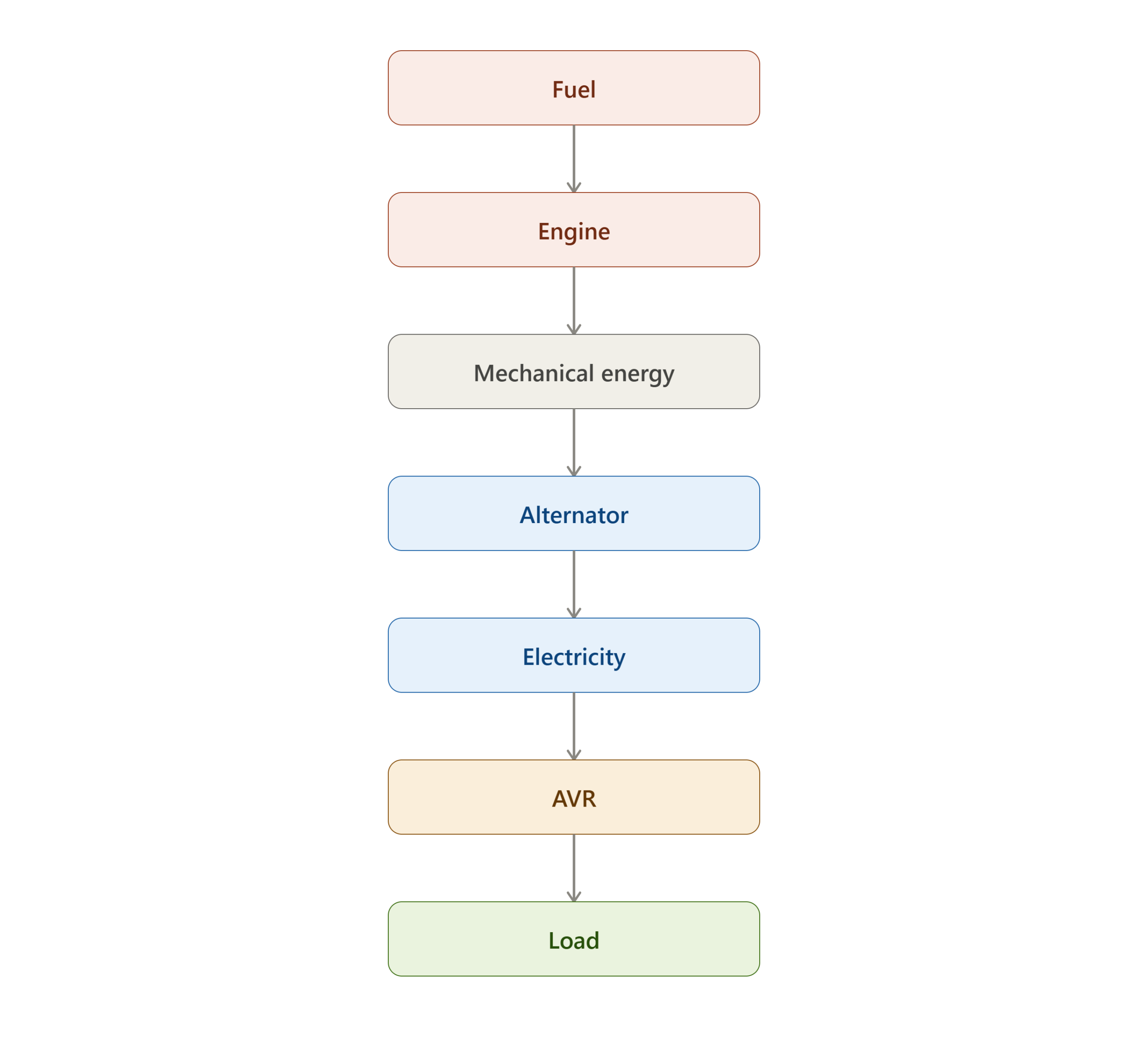
A generator set (genset) is an integrated system that combines an engine, an alternator, a cooling radiator, a control panel, and other components — the alternator is just one part of it. Once fuel is fed into the engine, the engine produces power that drives the alternator to generate AC electricity, which is then output to the load. Most generator sets are also equipped with a rectifier, which can convert AC into DC.
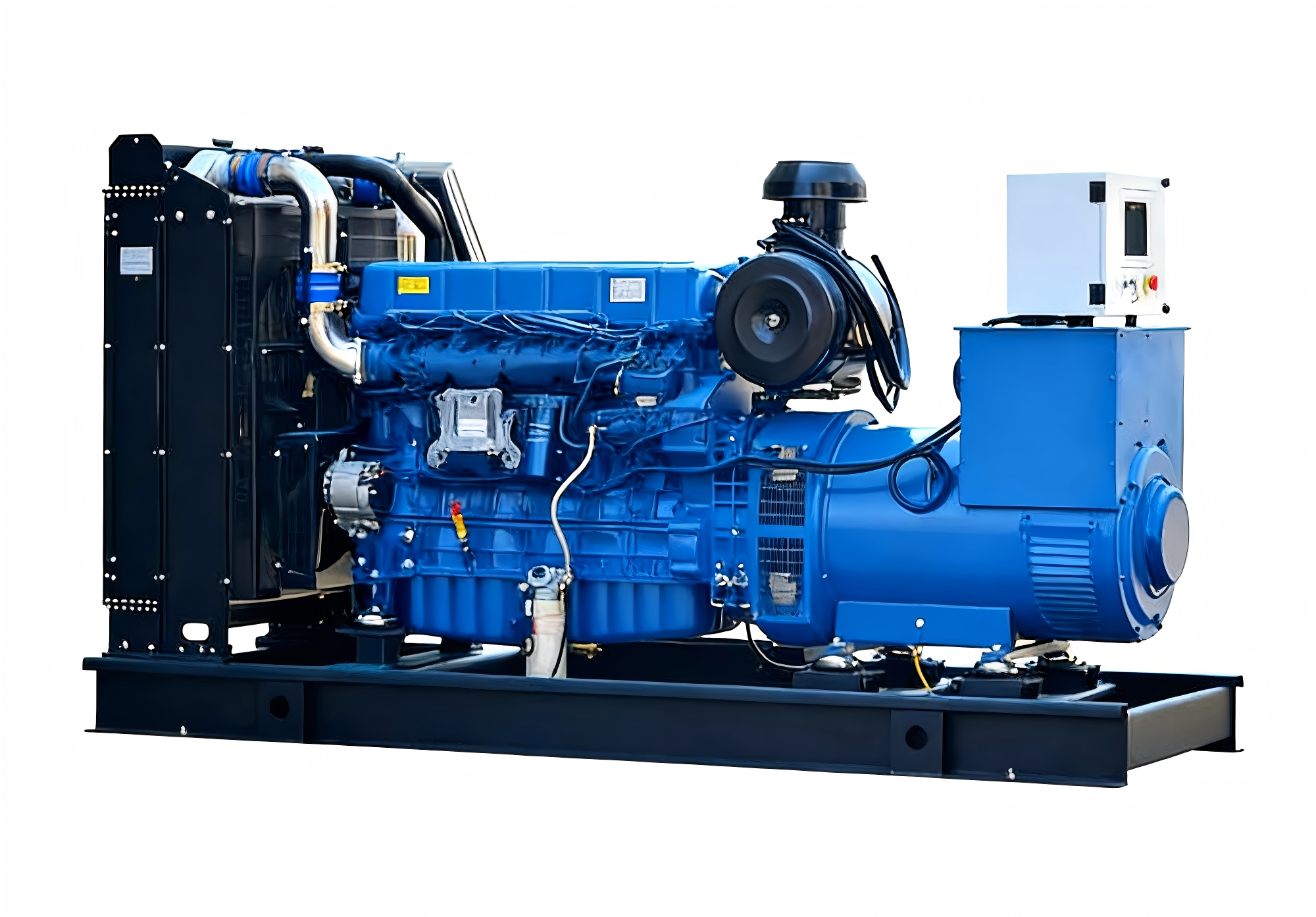
Below shows the operating process of a genset:
Key Differences Between an Alternator and a Generator Set
Working Principle
Both devices generate electricity based on the principle of electromagnetic induction, but the relationship between them is one of inclusion — the alternator is part of the generator set.
A generator set’s working principle covers the entire power generation process: fuel combustion produces chemical energy, which drives the engine to produce mechanical energy, which in turn drives the alternator to generate electrical energy. In short, a generator set’s working principle is the step-by-step process of turning fuel into electricity.
An alternator’s working principle, on the other hand, is the specific internal generation process: the engine drives the rotor to spin, producing a magnetic field; the stator then cuts through this magnetic field to generate AC electricity.
Output Current
A single alternator can only output AC electricity. A generator set, however, can use a rectifier to convert its AC output into DC — meaning a generator set can supply both AC and DC, making it more adaptable to your various needs.
Main Components
As part of a generator set, an alternator’s main components include the rotor, stator, excitation system, and AVR (Automatic Voltage Regulator). A generator set’s main components include the engine, alternator, cooling system, and control panel.
Installation
The alternator is usually installed as part of the generator set. The generator sets are assembled by the manufacturers and then sent to the customers.
Mobility
Alternators are rarely used independently; generator sets come in two types – portable (small-sized / trailer-mounted) and fixed, which cover a wider range of applications.
Certifications
The alternators usually have IEC and ISO certifications. The generator set not only has certification for the entire machine, but also for each component, such as ISO, CE and IEC. There are emission standards for each region.
| Type | Alternator | Generator Set |
| Output current | AC only | Can produce AC, and can convert it to DC |
| Working principle | Based on electromagnetic induction; converts mechanical energy into electrical energy | From fuel to electricity: chemical energy converts to mechanical energy, which then converts to electrical energy |
| Main components | Rotor, stator, excitation system, AVR | Engine, alternator, cooling system, control panel |
| Standalone operation | No | Yes |
| Battery charging | Can be part of a battery charging system, but cannot charge a battery directly | Can be used to charge a battery |
| Installation | Installed as a part of the genset | Delivered as a complete ready-to-use unit |
| Mobility | None | Fixed type / Trailer type |
| Applications | OEM equipment, spare parts, industrial equipment | Backup and primary power for buildings, hospitals, data centers, and similar facilities |
| Certifications | IEC and ISO | ISO and CE for the whole set, ISO for engine, each component has its own certification. |
How the Alternator Affects Generator Set Performance
Now that you have a general understanding of both a generator set and an alternator, let’s look at how the alternator — as a key component of the genset — has a significant impact on the whole system.
Voltage Stability
The AVR inside the alternator stabilizes the output voltage. Before you buy, be sure to ask whether the alternator is equipped with an AVR. A high-quality alternator offers faster voltage regulation, smaller voltage fluctuations, and better load adaptability.
Fuel Consumption
If the alternator’s efficiency is low, the generator set will need more fuel to generate the same amount of electricity.
Efficiency
The alternator’s generation efficiency directly affects the performance of the entire genset. Its manufacturing design and winding materials both influence generation efficiency. A good alternator typically delivers higher conversion efficiency, lower material losses, and a smaller temperature rise.
Temperature Rise
Heat is produced during power generation. If the alternator’s cooling design is poor, it will affect generation efficiency, may prevent the generator from sustaining continuous operation, and can damage components — increasing the risk of failure.
Final Thoughts
Both a generator set and an alternator are mechanical devices, and the alternator is typically a key component of the generator set — it affects the performance of the whole system. Be sure to consider the specific condition of the alternator before purchasing a generator set. If you have any questions about alternators or generator sets, feel free to contact us — UsuperPower is here to provide you with the best power solutions.

FAQ
Why do diesel generators use an alternator instead of a DC generator?
AC electricity has a much wider range of applications — many devices require AC power — and alternators are also more efficient than DC generators.
Can an alternator generate electricity without an engine?
Generally, no. An alternator needs a power source to generate electricity.
Can I just replace the alternator on my diesel generator?
No. We cannot guarantee that your old diesel generator will be compatible with a new alternator, and installing one could cause the entire genset to fail. We recommend replacing the whole generator set instead, for a more reliable outcome.
How fast does an alternator need to spin to generate electricity?
An alternator begins generating electricity as soon as it starts spinning, but to produce the rated voltage and frequency, it must run at its designed speed. Most 50Hz diesel generators run at 1500 rpm, while 60Hz units run at 1800 rpm.
Can an alternator charge a dead battery?
An alternator outputs AC electricity, which cannot charge a battery directly — it needs to pass through a rectifier to charge a battery indirectly.
Which one should I choose for my business?
We recommend using a generator set. It integrates more functions and can supply both AC and DC power, whereas an alternator cannot generate electricity on its own and requires an additional power source. For this reason, a generator set is generally the better choice.