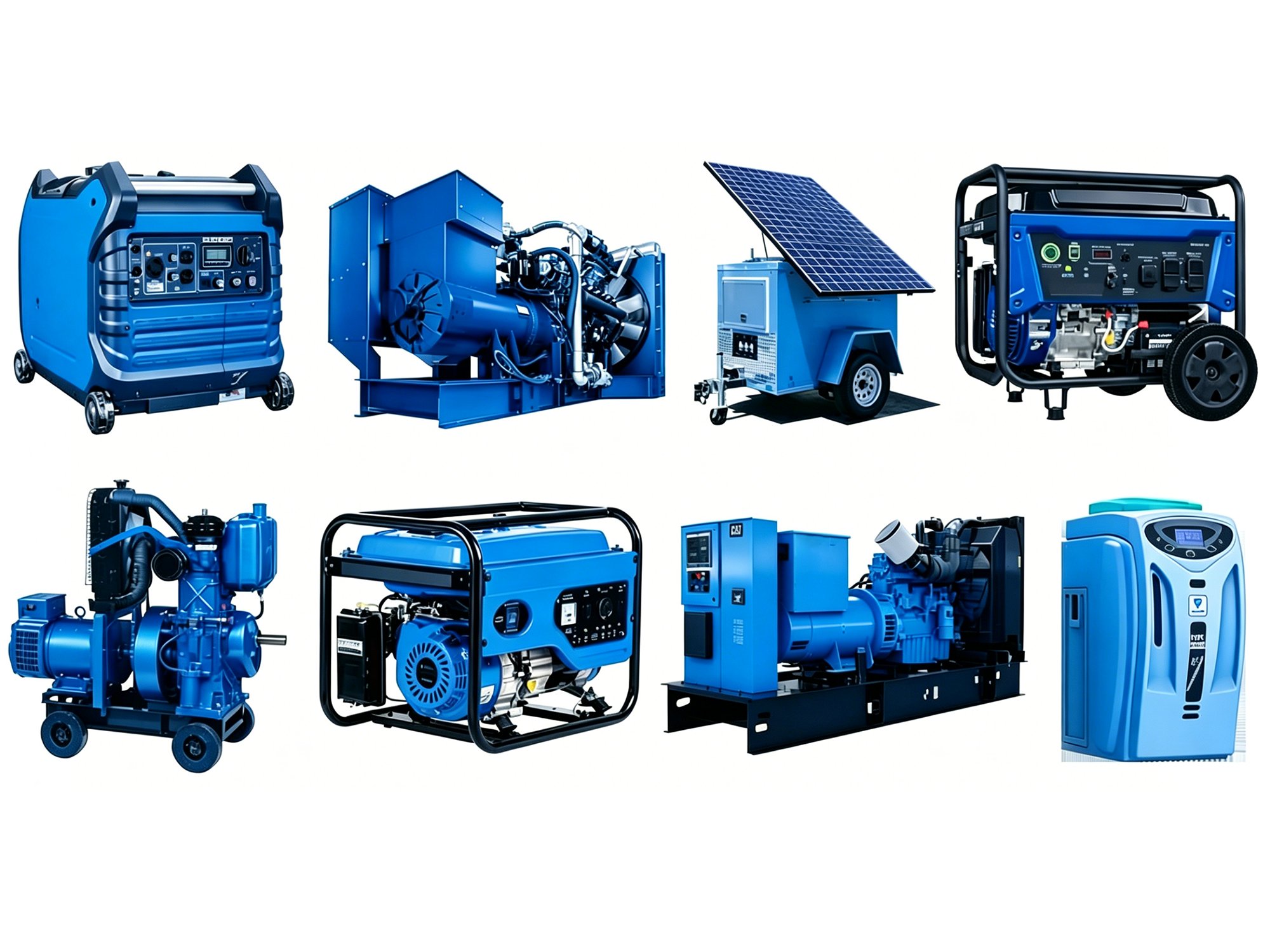
Electric generators convert mechanical energy into electrical energy and play a key role in industry. Choosing the right generator for you matters even more — generators can be divided into AC generators and DC generators based on the type of output current. Next, UsuperPower will walk you through the differences between the two.
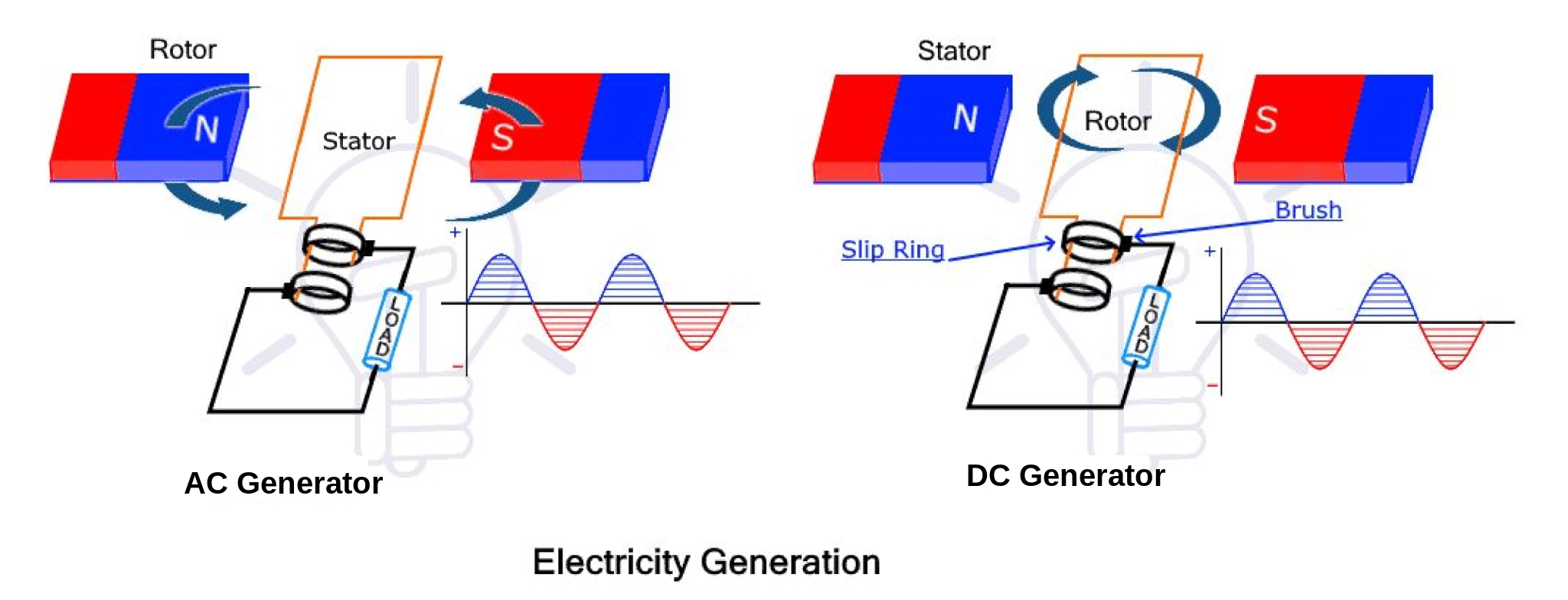
Working Principle
Although both are generators and operate on the same basic principle, there are some differences between them. Here’s an introduction to how each one works.
What Is an AC Generator
An AC generator converts mechanical energy into electrical energy in the form of alternating current. It’s based on the principle of electromagnetic induction — a rotating magnetic field generates voltage in stationary windings. In a diesel genset, the energy conversion process is as follows:
Diesel fuel → diesel engine → mechanical energy → alternator → AC power generated.
What Is a DC Generator
A DC generator converts mechanical energy into electrical energy to produce direct current. Like an AC generator, it also follows the principle of electromagnetic induction. As voltage is generated, the DC generator’s commutator rectifies it so the current flowing to the external circuit moves in only one direction. Its power-generation process is as follows:
Mechanical energy → armature rotation → electromagnetic induction → commutator → DC power generated
AC Generator and DC Generator: Key Differences
Both AC generators and DC generators convert mechanical energy into electrical energy through electromagnetic induction, but the biggest difference between them lies in the type of output current and how the electrical energy is delivered from inside the generator to the external circuit. AC generators produce alternating current, while a traditional DC generator uses a commutator to deliver direct current to the external circuit.
Output Current
An AC generator produces alternating current, where the voltage and current change periodically over time and the direction of current flow also reverses periodically. Modern industrial AC generators typically output 50Hz or 60Hz AC power and can be designed for single-phase or three-phase output;
a DC generator, on the other hand, supplies direct current to the external load. A traditional DC generator uses a commutator and brushes for mechanical commutation, keeping the current in the external circuit flowing in a single direction.
Main Output Component
Modern industrial AC generators typically use a brushless excitation system, which eliminates the need for traditional brushes in the main output circuit. This reduces brush wear and lowers the amount of routine maintenance required. As a result, brushless AC generators are well suited to applications that need long standby periods or high power output; a DC generator, however, is usually equipped with brushes, which wear out over time, along with the commutator, so a DC generator requires more maintenance.
Application Scenarios
AC generators and DC generators are used in very different scenarios. You can see the difference just from the type of equipment they power — AC generators are used more in industrial equipment and as backup power sources, while DC generators are used more for electroplating and battery charging.
To help you see the difference more clearly, we’ve put together a table for you:
| Feature | AC Generator | DC Generator |
| Output Current | Alternating current | Direct current |
| Main Output Component | Alternator | DC Generator |
| Brushes | Typically brushless design | Typically equipped with brushes |
| Maintenance | Low maintenance needed | Requires frequent maintenance |
| Internal Structure | Rotating magnetic field, stationary armature | Commutator and brushes, produces DC |
| Transmission | Suitable for long-distance transmission | Not well suited to direct use; less efficient at high speed |
| Application | Industrial power, commercial power, backup power | Electroplating, battery charging, DC motor drives |
| Commutator | Usually not equipped | Usually equipped |
Choosing the Right Generator for You
When choosing between an AC and a DC generator, consider the following factors first:
Load Type:First confirm whether your load needs AC or DC power. Industrial motors, pumps, compressors, HVAC equipment, and most three-phase equipment typically run directly on AC power, so an AC generator is a better fit for these applications. If your load specifically needs DC power, you can use a DC generator, or pair an AC generator with a rectifier or battery charger to supply DC power.
Transmission Distance:AC is easy to step up or down using a transformer, making it well suited to traditional power distribution systems. If you need to transmit power over long distances, choose an AC generator.
Ease of Maintenance: AC generators need less frequent maintenance.
Power Quality Requirements: For equipment that needs a stable current output, a DC generator is the better choice.
Why Most Diesel Generators Are AC Generators
Most modern diesel gensets use an AC Generator, mainly because alternating current is better suited to industrial and commercial power systems. The diesel engine supplies mechanical energy, and the alternator converts that mechanical energy into AC power, which then reaches the load through the control system and distribution equipment.
First, an AC generator can supply single-phase or three-phase AC power. Three-phase AC generators are especially well suited to industrial applications, providing stable power for motors, pumps, compressors, HVAC systems, and other high-power equipment.
Second, AC power can be stepped up or down with a transformer, making it easier to connect to existing industrial power distribution systems. This compatibility is essential for factories, commercial buildings, and infrastructure that need different voltage levels.
In addition, modern diesel gensets typically use a brushless alternator and an AVR, which reduces brush wear and helps maintain a stable output voltage. This makes AC generators well suited to backup power and long-running prime power applications. An AC generator can also be conveniently paired with an ATS for seamless integration. When the utility power fails, the diesel genset can start automatically, and the ATS switches the backup power over to the load.
Therefore, for most industrial, commercial, and infrastructure applications, an AC generator is the more common choice for diesel gensets.
Final Thoughts
Choosing the right generator isn’t just about comparing AC and DC output performance. You also need to consider factors such as power rating, voltage, frequency, phase, load characteristics, operating environment, and standby or prime power requirements. UsuperPower can help you choose the right genset based on your application needs and electrical requirements.
FAQ
Why do many DC devices still use an AC generator?
Because the AC power produced by an AC generator can be converted into DC power using a rectifier. So even if a device needs DC power, it doesn’t necessarily need a DC generator. AC generators are more versatile and easier to connect to existing industrial power systems.
Are an AC generator and an alternator the same thing?
In the modern genset industry, “alternator” usually refers to the part of the generator that produces AC power, so in many cases you can think of an alternator as an AC generator.To be precise,AC Generator Set refers to the complete genset, while the alternator is the main electrical component within it responsible for generating power.
Why is an AC generator more common than a DC generator?
An AC generator fits better with modern industrial systems, because AC power is easier to step up and down, works well for long-distance transmission, and suits three-phase industrial power. As a result, most industrial companies choose to use AC generators.
Which is better, AC or DC generator?
There’s no absolute answer. You can choose the generator that fits your needs — an AC generator is suited to industrial power generation and backup power, while a DC generator is suited to battery charging and equipment that needs DC power.
Can an AC generator charge a battery?
Yes. An AC generator can use a rectifier or battery charger to convert AC power into DC power, which can then charge the battery.