In a diesel generator, the turbocharger is a critical component — it’s a device that compresses air before it enters the engine. This compression increases the mass air flow and oxygen supply going into the engine, improving combustion efficiency and producing more power. UsuperPower will walk you through the turbocharger in detail below.
What Is a Turbocharger?
A turbocharger is a forced-induction device that uses exhaust gas to spin a turbine, which boosts the engine’s power. That turbine drives a compressor, which forces more air into the engine for more complete combustion and better engine performance. Turbocharging improves the engine’s intake and combustion conditions and, working alongside a modern diesel engine’s emissions control system, can help lower emissions — but the turbocharger itself isn’t an exhaust after-treatment device.
How a Turbocharger Works in a Diesel Engine, Step by Step
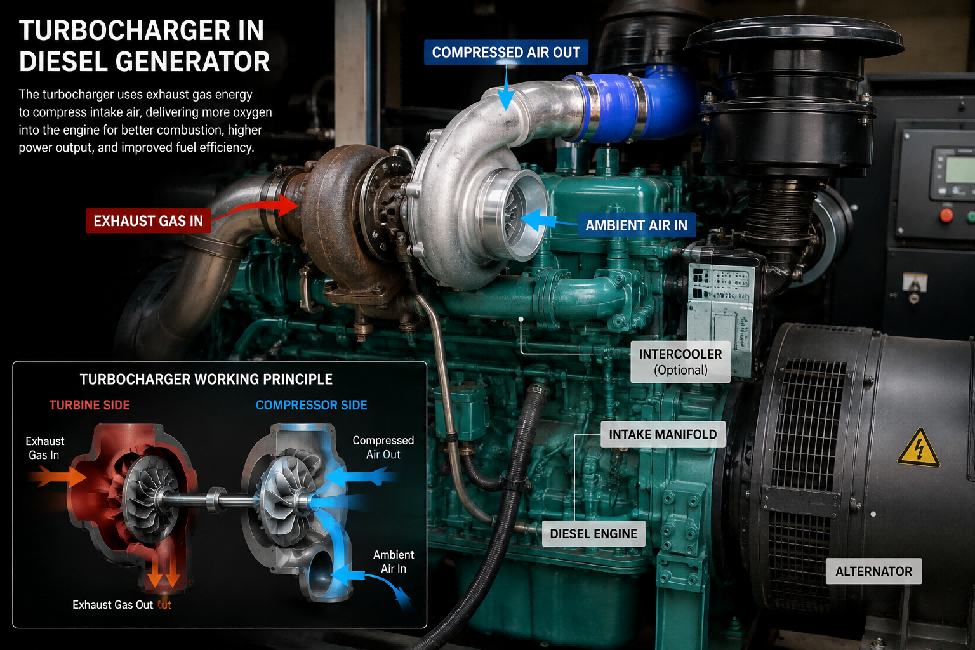
A turbocharger has two key components — the turbine and the compressor — which work together. Here’s how the process works, step by step:
Step 1: Diesel Combustion Produces Exhaust Gas
Burning diesel produces high-temperature exhaust gas. Without a turbine to make use of it, this gas would simply be expelled — but with a turbine in place, the engine’s exhaust gas flows into the turbine housing instead.
Step 2: The Exhaust Gas Spins the Turbine
The high-temperature exhaust gas from the engine spins the turbine blades, which are connected to the compressor by a shaft.
Step 3: The Turbine Drives the Compressor
As the shaft rotates, it drives the compressor wheel, which draws in air.
Step 4: The Compressor Compresses the Air
Once air enters the compressor, it gets compressed.
Step 5: The Compressed Air Enters the Diesel Engine
The compressed air enters the engine’s intake manifold, increasing the oxygen supply. With more airflow, the engine can burn more fuel, which improves combustion efficiency.
One more thing worth noting: the turbocharger doesn’t generate power on its own — it simply uses the energy in the exhaust gas to compress incoming air, which allows the engine to produce more power.
Main Components of a Turbocharger
A turbocharger’s components each play their own role while working together.
Turbine
The turbine sits on the exhaust side of the turbocharger. It converts the energy in the exhaust gas into mechanical energy and drives the compressor through the connecting shaft.
Compressor
The compressor draws in the surrounding air and compresses it before it enters the engine. The compressed air has a higher density, which improves combustion efficiency.
Shaft and Bearings
The shaft connects the turbine and the compressor.
The bearings support the shaft as it spins at high speed and reduce friction, while the engine oil lubricates the assembly and helps carry away some of the heat.
Wastegate
By diverting excess exhaust gas away from the turbine, the wastegate prevents boost pressure from getting too high, protecting the engine from damage caused by over-boosting.
Intercooler
An intercooler is used in many turbocharged diesel generator sets, especially high-power units.
It cools the compressed air before it enters the engine — the lower temperature increases the air’s density, which helps improve combustion.
To help you understand each component’s role more clearly, here’s a more visual table for you:
| Component | Part | Function |
| Turbine | Turbine housing | Collects the exhaust gas coming from the engine |
| Turbine blades | Converts exhaust gas energy into rotational power | |
| Compressor | Compressor wheel | Draws in and compresses air |
| Compressor housing | Directs and pressurizes the incoming air | |
| Shaft | Connects the turbine and the compressor | |
| Bearings | Supports the rotating shaft | |
| Intercooler | Cools the compressed intake air | |
| Wastegate | Improves control by bypassing part of the exhaust flow | |
Turbochargers in Diesel Generator Sets
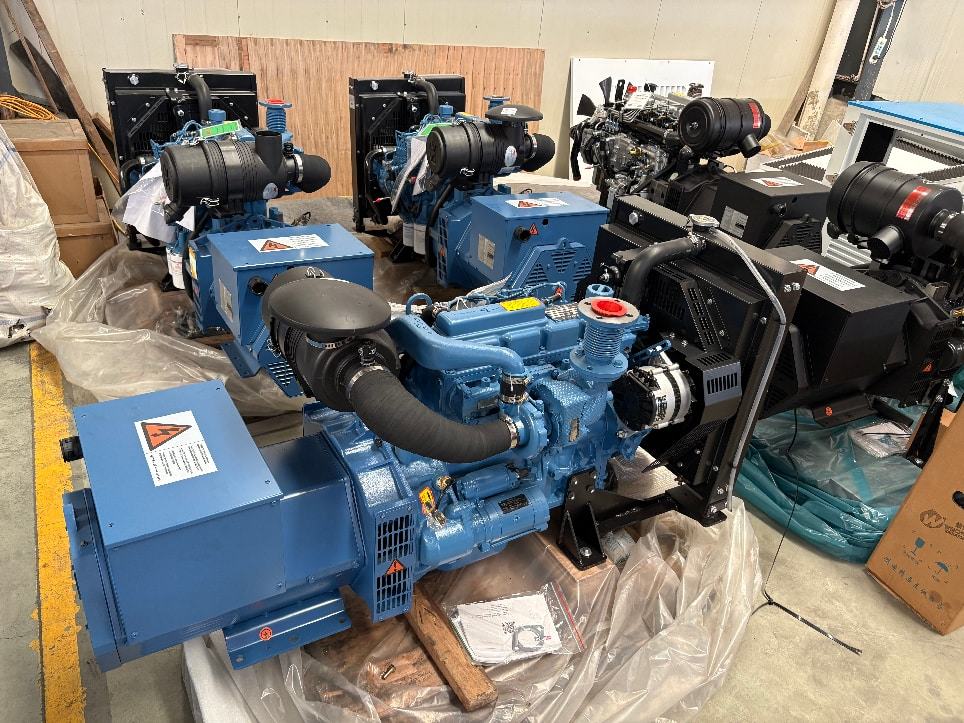
Turbochargers are widely used in industrial diesel generators to improve combustion efficiency and boost output power. By compressing the intake air, they help the generator run stably under heavy loads.
How Turbochargers Affect Generator Sets
- They let a smaller engine produce more power — more air entering the engine allows fuel to burn more completely, and that higher combustion efficiency reduces fuel waste while letting the generator produce power steadily.
- More efficient combustion also reduces emissions, making the generator more environmentally friendly.
- They help the generator keep running normally at high altitudes. At higher elevations, the air is thinner, and a naturally aspirated engine can struggle to fire and lose power. A turbocharged engine, on the other hand, can force more air into the engine to keep it running properly, so the generator stays stable.
- As the generator’s load increases, the fuel injection system injects more diesel, which means more exhaust gas. That spins the turbocharger faster, pushes more air into the engine, and gives the engine more power.
The Difference Between Turbocharged and Naturally Aspirated Engines
Engines mainly draw in air in one of two ways: naturally aspirated or turbocharged.
Naturally aspirated: Relies on atmospheric pressure to draw air into the engine, which limits power output.
Turbocharged: Uses a turbine-driven compressor to force more air into the engine, boosting both power and fuel efficiency.
UsuperPower offers diesel generator sets with both naturally aspirated and turbocharged engines, and we’ll recommend the right one based on your needs.
Final Thought
A turbocharger is a great way to boost a generator’s output power and reduce exhaust emissions, but it needs proper maintenance to keep running well over the long term. If you need a generator set with a turbocharger, UsuperPower can provide you with a complete power solution.
FAQ
What Is Turbo Lag?
Turbo lag refers to the brief delay in the engine’s power response that happens because the turbocharger needs some time to build up enough boost pressure after the engine’s load or speed changes.
Do Turbocharged Diesel Engines Need More Maintenance?
Yes, turbocharged diesel engines generally need more maintenance than naturally aspirated ones. Routine maintenance usually focuses on the engine oil, air filter, intake system, and exhaust system, and the turbocharger itself rarely needs to be taken apart frequently.
Can a Turbocharger Overheat?
Yes, it can. A turbocharger operates at very high speeds, and friction between its components generates heat — and the high-temperature exhaust gas passing through it can also cause overheating.
Does a Diesel Generator Need a Turbocharger?
Not every diesel generator needs a turbocharger. Whether you need one depends on the engine’s design, rated power, application, emissions requirements, altitude, and the manufacturer’s specific specifications.
What Happens When a Diesel Turbocharger Fails?
When a diesel engine’s turbocharger fails, it usually leads to insufficient intake airflow, abnormal boost pressure, or oil leaks, which in turn affect combustion and the engine’s power output. For a diesel generator set, a severe turbocharger failure can also reduce load capacity, cause frequency fluctuations, or even shut the unit down. The exact symptoms depend on the type and severity of the failure.