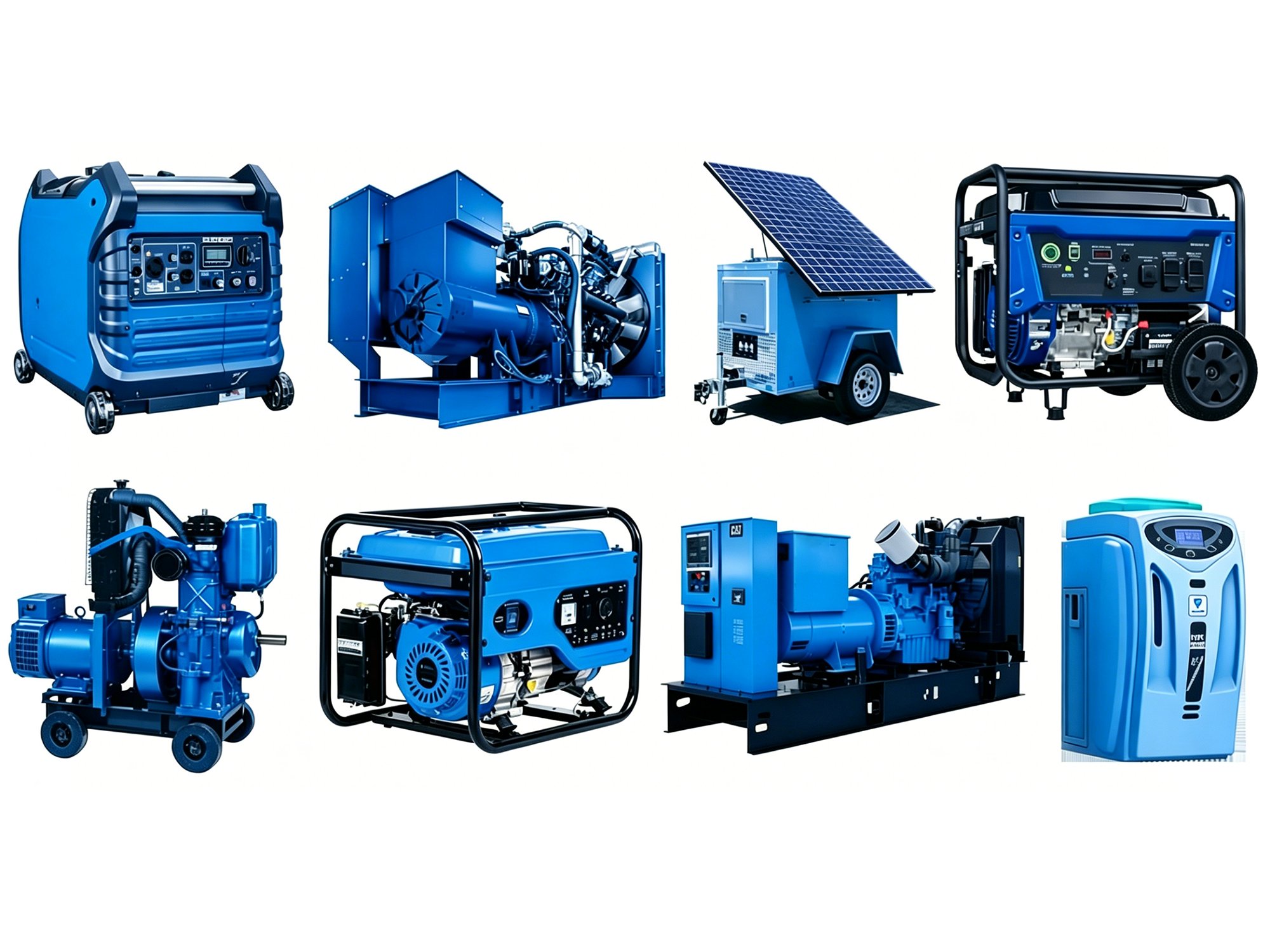
If one day an extreme thunderstorm or hurricane causes a power outage in your city, even a few seconds of power interruption can cause a lot of losses. What can you do to avoid these losses? The ATS can significantly minimize the risk of power interruption.
This article will help you understand its working principle, main types, and how to choose a suitable ATS for your generator.
Automatic Transfer Switch Definition
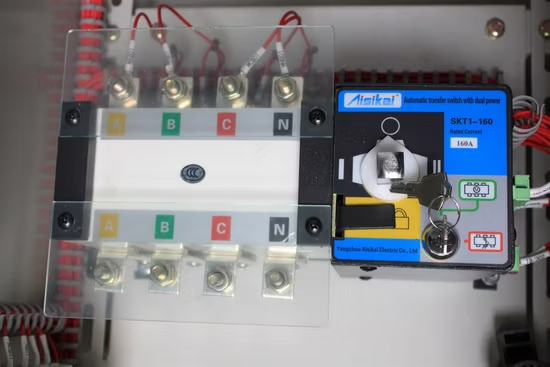
An automatic transfer switch (ATS) is a device that automatically switches electrical loads between utility power and a standby power source.
It can continuously monitor the status of the main power, automatically detect power failures and switch loads seamlessly. When power outages or abnormal conditions (such as undervoltage, overvoltage, or phase loss) occur, the ATS will signal to the standby generator, and the switch will automatically transfer the load from the main power to the standby generator.
When the main power supply is stable, the ATS switches the load back to the grid and shuts down the generator. It is crucial for you to install automatic transfer switches for most generators because they can prevent machine shutdown, protect your sensitive equipment, and ensure the start-up of standby generators.
- Detect main power failure
- Start the generator automatically
- Transfer load safely
- Return the load to the main power
Automatic Transfer Switch Working Principle
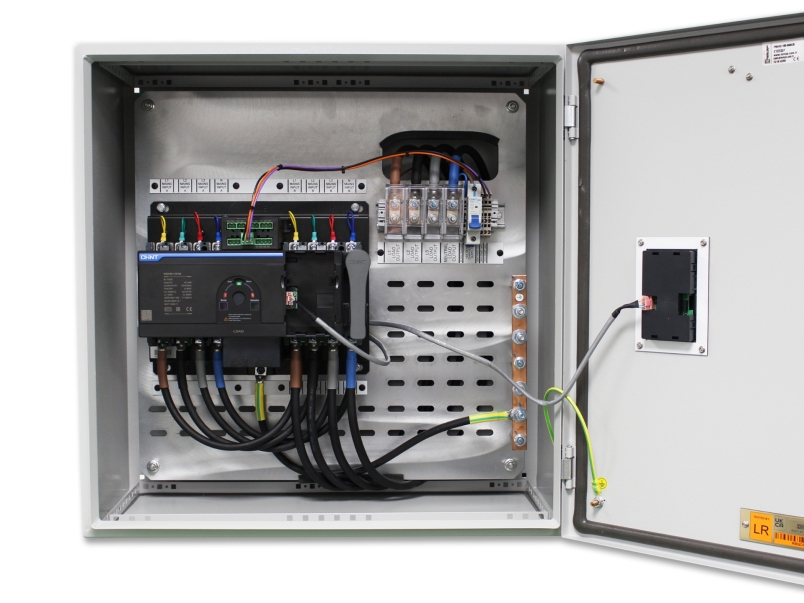
An automatic transfer switch (ATS) consists of many key components that work together:
- Main Control Unit
It monitors the power supply and manages switch operations.
- Power Contacts
It is used for physical contact to connect power sources.
- Voltage Sensors
These sensors are used to detect power quality and availability.
- Transmission Mechanism
It performs the actual switching process.
- Status Indicator
It displays the current operating status.
- Protection Circuit
These components can prevent damage caused by electrical faults.
In a word, generator ATS is a highly integrated, self-acting power switching device controlled by dedicated logic. It will monitor the electrical parameters (voltage, frequency) of the main power and standby power sources. Their default connection is to the utility power source.
As a rule, automatic transfer switches usually operate automatically. But you also have manual and non-automatic modes to choose:
Manual operation is to switch on the power by pulling the handle or pressing the button.
Non-automatic operation refers to rotating switches or pressing buttons to activate electromagnetic devices, thereby driving the switching mechanism.
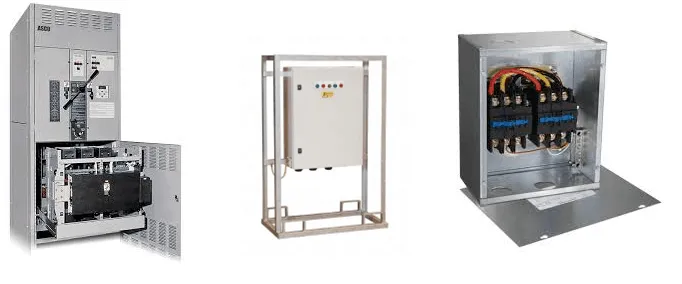
Types of Automatic Transfer Switches for Generators
It is necessary for you to determine which kind of transition you need; the detailed type should be based on your application and the importance of those functions to your project safety.
Open Transition ATS
An open transition ATS will disconnect the connection between the device and the main power and then connect the device to the standby generator, which is a break-before-make method. Open transition includes open-delayed and open in-phase.
Closed Transition ATS
The closed transition ATS will connect the device to the standby power source before disconnecting from the main power source. This type of ATS can eliminate the power outage gap between the device and the power supply, ensuring your device can operate continuously.
Delayed Transition ATS
The delayed transition ATS working principle is similar to the closed transition ATS. But a delayed transition will also increase the latency between connections. If inductive load residual voltages may dissipate before a transition occurs, then this option is ideal for you.
Common Application of ATS in Power Systems
Nowadays, a manual switch is no longer a feasible solution, especially for most high-power applications. Getting a high-quality ATS is a must if your applications need a continuous power supply, are unstable in power supply, or the device is very sensitive to power fluctuations. Here are some application scenarios where you need to use ATS:
Industrial Applications
Manufacturing facilities need to equip an ATS for generators to avoid production line shutdowns during power outages. This will reduce your cost losses significantly.
Commercial Application
Power outages can cause interruptions of your business and loss of customers. A generator with ATS can prevent data loss and help maintain critical functions such as computers, communications, and others.
Data Center
A data center cannot bear the data losses caused by power outages. ATS can protect servers and network equipment from the impact of sudden power outages, ensuring data integrity and service availability.
Hospital and Healthcare
These facilities need to ensure 24/7 uninterrupted operation. ATS protects the life support system and medical equipment, ensuring the continuous operation of the intensive care unit. Your patient safety relies on this seamless power switching.
What ATS Solutions Are Available for You
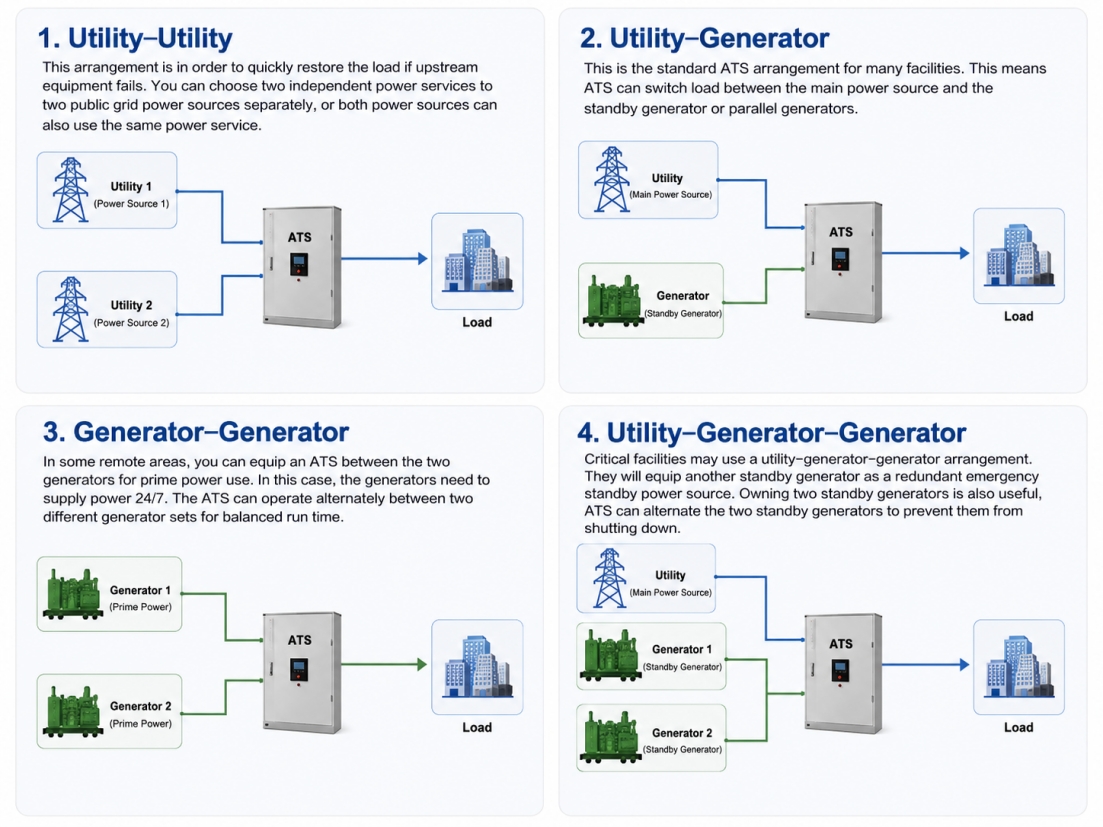
ATS can connect to 2 or 3 power sources. You can choose the following ATS arrangements based on your available power sources and application requirements.
Utility-utility
This arrangement is in order to quickly restore the load if upstream equipment fails. You can choose two independent power services to two public grid power sources separately, or both power sources can also use the same power service.
Utility-generator
This is the standard ATS arrangement for many facilities. This means ATS can switch load between the main power source and the standby generator or parallel generators.
Generator-generator
In some remote areas, you can equip an ATS between the two generators for prime power use. In this case, the generators need to supply power 24/7. The ATS can operate alternately between two different generator sets for balanced run time.
Utility-generator-generator
Critical facilities may use a utility-generator-generator arrangement. They will equip another standby generator as a redundant emergency standby power source. Owning two standby generators is also useful, ATS can alternate the two standby generators to prevent them from shutting down.
How to Choose Suitable ATS for Your Application
ATS selection must suit your equipment and application requirements. The following factors may help you choose the right ATS for your project:
Rated Current and Voltage
The ratings of ATS should handle the maximum load current, as well as the system voltage level.
Switching Time
The switching time can directly influence your sensitive equipment. Lower speed may cause a malfunction or data loss. Some modern ATS can offer transfer times under 100 milliseconds.
Electrical and Mechanical Lifespan
Regular switching may affect ATS lifespan. Please consider the potential number of times you may need ATS activation.
Electromagnetic Compatibility (EMC)
ATS must operate without causing interference. EMC compliance protects your nearby electronic equipment.
Final Thought
A generator automatic transfer switch is an essential part not only for your generator but also for your business and project. Usuper Power provides high-quality automatic transfer switch solutions suitable for your different generator sets. Contact us to learn more about our various automatic transfer switches.
FAQ
What is the main function of ATS?
- Automatic Power Failure Detection
- Seamless Electrical Load Transformation
- The Backup Power Overload Prevention
- 4. Power Quality Monitoring And Diagnosis
- Circuit Safety Protection
What is the difference between ATS and STS?
An ATS uses mechanical switches and typically transfers power in a few seconds, while an STS uses solid-state electronics to transfer power in milliseconds, making it suitable for critical loads such as data centers and hospitals.
What is the lifespan of a generator ATS?
The lifespan of a generator ATS typically ranges from 20 to 30 years. Maintenance frequency and environmental factors may all affect the lifespan of ATS.
How to select an ATS for a generator?
When you are selecting the ATS for your generators, you should take these factors into consideration: price, the load, size, style, continuous current rating, and voltage rating that works best with your standby power system.
What is the IEC standard for ATS?
IEC 60947-6-1 is the main IEC standard for Automatic Transfer Switches (ATS). It specifies the performance, safety, testing, and operational requirements for transfer switching.
Can ATS and STS be used together?
Yes. In some applications, such as hospitals or data centers, ATS and STS can work together to provide layered power protection.
Can ATS operate without automatic mode?
Yes. Many ATS also support manual and test modes for maintenance and emergency control.