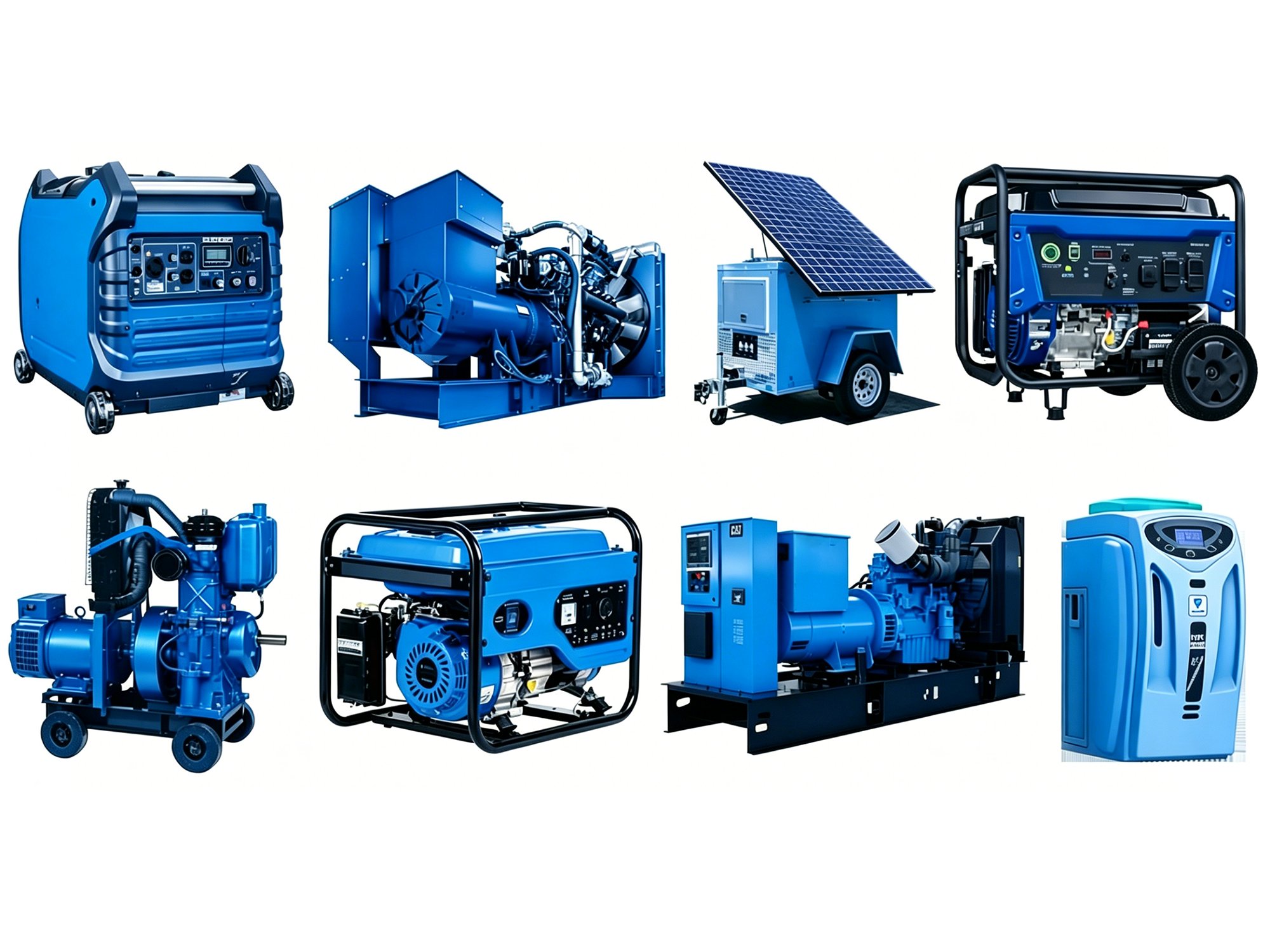
Your project needs a gas generator. But then you must answer an important question:
What types of gas should I use?
If you choose wrong fuel, it may cost your business tens of thousands of dollars unnecessarily. In this article, we’ll help you compare the different types of gas and learn which one is best for you
Why Choosing The Right Gas for Your Generator Matters?
The cost of owning a generator is not only the initial cost, but also subsequent fuel, installation, and maintenance costs.
- It can affect your long-term operating costs; the difference in fuel costs can amount to thousands or even tens of thousands of dollars.
- Their availability is different, and without a reliable fuel supply, your business or project may be negatively affected.
- It can influence the emissions and environmental compliance.
- Once you choose the right gas, it can help you improve generator’s reliability and reduce downtime, saving your maintenance costs.
Main Types of Gas for Your Generator
Similar to generator oil, there are many types of gas, including natural gas, propane (LPG), biogas, landfill gas, coalbed methane (CBM), and syngas. Natural gas and propane are the most commonly used gas for generators.
1.Natural Gas
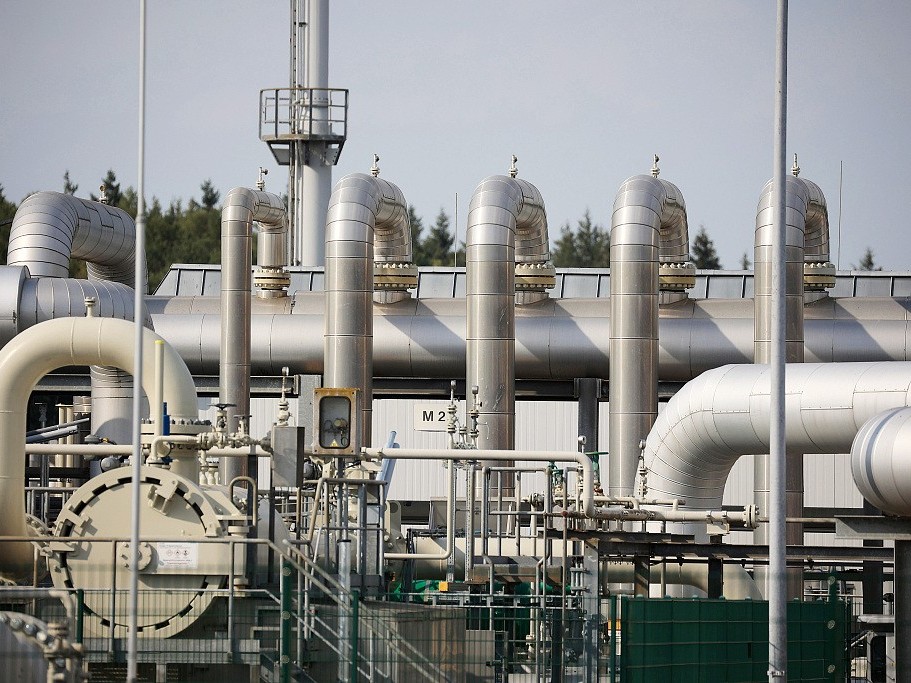
Natural gas is widely used for commercial generators and industrial generators; its reserves are abundant, and it can provide a stable fuel supply for your generator through pipeline transportation. It has low pollution and combustion noise, so natural gas generators are your cost-effective choice in large cities or CHP projects.
2.Biogas
Biogas is produced through anaerobic digestion of organic matter. It can not only generates power but also contributes to waste management. If your facilities are farms, sewage treatment plants, or landfills, you can use a biogas generator to reduce costs and waste pollution.
3.Liquefied Petroleum Gas(LPG)
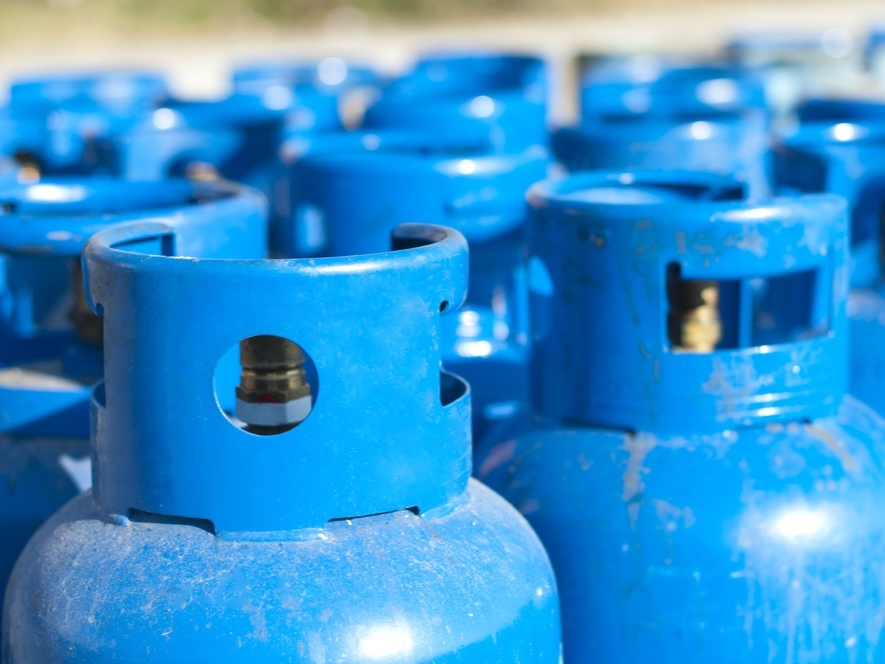
Liquefied petroleum gas is stored in liquid form under pressure, and can be transported easily. This makes it popular in residential areas or remote areas lacking natural gas pipelines. For many commercial and industrial applications, liquefied petroleum gas can effectively balance the fuel cost, operational reliability, and environmental requirements.
4.Landfill Gas
Landfill gas is a renewable fuel produced by the natural decomposition of organic waste in landfills. It can be used to power generators, converting waste into value. Therefore, landfill gas generators are suitable for municipal landfill or waste management facilities.
5.Coalbed Methane (CBM)
Coalbed methane was once considered a byproduct of mining, but now it is considered an optional clean gas for generators. For industrial operations, especially mining, you can use coalbed to reduce energy costs, improve energy efficiency, and reduce emissions.
6.Syngas
If your industry produces biomass, agricultural residues, or industrial waste, syngas can convert these wastes into fuel for gas generators. This helps you to utilize available resources better and reduce energy costs in waste-to-energy projects.
Difference between Each Gas Type
Although all of the above gases can be used for generators, they differ in availability, costs, emissions, and ideal applications. So understanding these differences can help you choose the most suitable gas solution for your project.
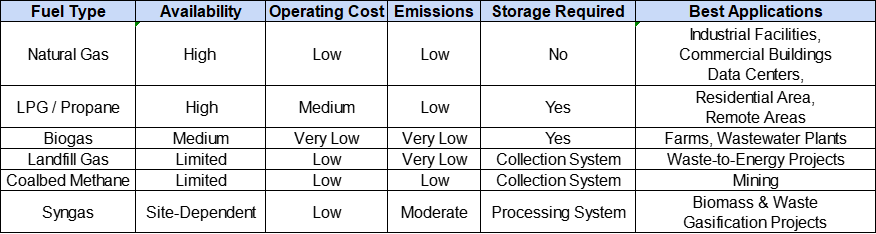
There is no single “best” generator gas type. Evaluating these factors carefully will help you select the most efficient and cost-effective solution for your application.
Steps to Choose The Suitable Gas Type
- Confirm the gas types and parameter ranges supported by your generator.
- List all gas options available in your area.
- Conduct a comprehensive evaluation of each option in terms of supply stability, compatibility, impurity content, economy, and safety, etc.
- Conduct a full cycle cost analysis, not just the initial investment or gas generator set price.
Especially for engineering and large-scale industrial projects, you should also consider the additional technical factors such as Wobbe Index, methane number, gas impurities, and combustion characteristics that may also influence your generator performance and long-term reliability.
Final Thoughts
Choosing the right gas for your generator is more than simply deciding between different gaseous fuels.
If you’re planning a project and aren’t sure which fuel option is right for you, Usuper Power can provide ideal energy solutions that meet your needs. Contact us and discuss your power needs. Usuper Power will help you identify the most cost-effective generator solution for your application.
FAQ
What type of gas do most generators take?
Gas generators typically run on natural gas or propane (LPG). Natural gas is the most commonly used because it can provide a continuous fuel supply through pipelines. Propane is another popular option, especially for facilities in remote areas where natural gas is unavailable.
What is the 80% rule for generators?
The 80% rule for generators means that a generator should normally operate at no more than 80% of its rated power during continuous operation. For example, a 100kVA generator is recommended to carry a continuous load of no more than 80kVA. This is considered to be the optimal range for maintaining the long-term performance and efficiency of the generator.
How long can 1KG of gas last on a generator?
The runtime of 1 kg of gas on a generator depends on the generator size and load level. A small gas generator operating at a moderate load may consume between 0.3 and 0.8 kg of fuel per hour. This means 1 kg of gas could last about 1 to 3 hours.
For larger industrial generators, fuel consumption is significantly higher, and 1 kg of gas may only provide a few minutes of operation.
Can generator use multiple gas types?
Yes, but not all generators support multiple fuel types. The dual-fuel generator can operate on natural gas and propane (LPG), while a tri-fuel generator may support gasoline in addition to gaseous fuels.
How long can a gas generator run continuously?
Natural gas generators can operate for days or even continuously when it is connected to a pipeline, while LPG generators depend on fuel tank capacity and refueling frequency. In industrial applications, properly maintained gas generators can run 24/7.
Can gas generators run in the rain?
No, gas generators should not be operated in the rain or wet conditions without proper protection. Direct exposure to rainwater can damage electrical components and create serious safety risks, such as electric shock or short circuits.